
KEY POLICIES & ACTIVITIES
ENVIRONMENTAL MANAGEMENT STRATEGY
4 Core Values of Environmental Management
Qualitative Goals
Establish a company-wide integrated environmental management system and strengthen its operational foundation.
Ensure compliance with domestic and international environmental regulations and enhance employee awareness of environmental management.
Build a transparent reporting system through the collection and management of environmental performance data and the development of a greenhouse gas inventory.
Promote a circular economy through resource conservation and waste minimization.
Quantitative Goals
Establish an Environmental Management Committee and maintain ISO 14001 certification.
Achieve zero environmental regulatory violations and develop and implement at least one environmental training program annually.
Achieve a 100% emissions accounting rate through the establishment of a greenhouse gas inventory and a company-wide environmental database.
Conduct quarterly resource reduction campaigns and maintain annual scrap costs for discontinued and obsolete inventory below KRW 2.7 billion.
Strategic Initiatives
01
Establish and operate an Environmental Management Committee.
02
Maintain ISO 14001 certification.
03
Regularize compliance evaluations and improvement activities.
04
Regularize environmental management training for employees.
05
Establish a greenhouse gas inventory and aggregate Scope 1 and Scope 2 emissions.
06
Manage an integrated environmental database.
07
Conduct resource reduction campaigns.
08
Implement activities to reduce discontinued and obsolete inventory.

Environmental Management Organization
MOTREX maintains an company-wide environmental management system.
Critical issues related to environmental management are overseen at the executive level, while relevant departments manage key environmental factors, including regulatory compliance, energy use, greenhouse gas emissions, water resources, and waste.
Furthermore, the Company regularly reviews the operational status of its environmental management system through internal audits and inspections and links identified areas for improvement to follow-up actions, thereby continuously strengthening its effectiveness and accountability.
Mid- to Long-term Environmental Management Roadmap
To enhance the effectiveness of environmental management, we have established a phased roadmap and pursue continuous improvement.
In the short term, we will strengthen the reliability of environmental data and regulatory compliance frameworks while improving our operational system. In the mid term, we plan to enhance the management of key environmental indicators by linking company-wide environmental KPIs to corporate management processes.
2025–2026

Foundation Building Phase
- Establish an Environmental Management Committee and a dedicated organization, and develop an operational framework.
- Maintain ISO 14001 certification and manage regulatory compliance.
- Build a greenhouse gas inventory and pilot an integrated environmental database system (including overseas subsidiaries).
- Identify waste reduction initiatives and establish management standards for discontinued and obsolete inventory.
- Develop MOTREX-specific environmental education curricula and provide environmental training (e.g., product carbon emissions).
2027–2028
Operational Integration Phase
- Systematize the management of company-wide environmental KPIs and integrate them into business performance metrics.
- Provide regular environmental training for all employees and conduct internal compliance audits related to environmental regulations.
- Calculate carbon emissions per product and integrate carbon accounting into internal systems (e.g., new PLM system).
- Aggregate company-wide emissions, conduct regular monitoring of environmental performance, and establish mid- to long-term carbon neutrality targets.
- Manage obsolete inventory across domestic and overseas business sites and build a resource circulation framework for reuse.
2029–2030
Expansion & Advancement Phase
- Fully integrate environmental KPIs into Board of Directors (BOD) and executive decision-making processes.
- Conduct regular internal compliance audits related to environmental regulations.
- Establish and operate eco-friendly development and sustainable procurement policies.
- Conduct external third-party verification of environmental data, enhance disclosure reliability, and publicly disclose carbon neutrality performances.
- Implement a full-scale company-wide resource circulation program.
Environmental Management Policy
MOTREX has established its Environmental Management Policy and applies it across all stages of product development, production, sales, and management at its domestic business sites.
The Company defines key environmental management areas as energy and greenhouse gas emissions, water, waste, air pollution, chemical substances, biodiversity, product environmental impact, and supply chains. It also establishes procedures for environmental policy and target setting, identification of environmental aspects,
Environmental Management Policy
MOTREX has established its Environmental Management Policy and integrates it into business operations to minimize environmental impacts across the entire lifecycle of products and services. We manage our business activities based on key principles including pollution prevention, resource efficiency improvement, climate
MOTREX Co., Ltd. hereby establishes the following Environmental Management Policy to contribute to global environmental preservation through the establishment, implementation, and continuous improvement of its environmental management framework.
- In pursuit of ESG management, the Company shall minimize environmental impacts across all business activities, products, and services while maintaining an integrated, company-wide environmental management system with clearly defined policies, procedures, and responsibilities.
- To strengthen environmentally responsible management, the Company shall establish detailed action plans by organization and quantitatively manage environmental performance by building databases for key indicators such as greenhouse gas emissions, energy, and waste..
- The Company shall set and implement concrete targets for energy reduction and greenhouse gas emissions to prevent environmental pollution, respond to climate change, and protect ecosystems.
- The Company shall establish a resource circulation management system and pursue continuous improvement activities, including waste reduction, expanded recycling, and enhanced energy efficiency.
- The Company shall faithfully comply with domestic and international environmental regulations and customer requirements, regularly assess environmental risks and opportunities, and prepare for environmental emergencies.
- The Company shall enhance environmental awareness through employee training and participation, ensure responsible communication with stakeholders, and regularly review and improve environmental performance.
Environmental Management Declaration
In 2025, MOTREX established its Environmental Management Declaration to reinforce its environmental values and responsibilities. Driven by the CEO’s commitment, the declaration contains key principles including climate change response, resource circulation enhancement, pollution prevention, and expansion of eco-friendly values throughout the supply chain, presenting MOTREX’s environmental philosophy to employees, business partners, and stakeholders.
Environmental Management
Declaration
MOTREX Co., Ltd. (hereinafter “the Company”) recognizes the environment as a core value for the future of humanity and the sustainable growth of enterprises, and hereby declares its commitment to eco-friendly value creation across all business operations.
Through ESG management, the Company will continuously strive to reduce environmental impacts throughout the entire lifecycle of its operations, products, and services while promoting resource efficiency, pollution prevention, and climate change response. In addition, the Company commits to regularly reviewing and improving environmental performance, faithfully fulfilling regulatory and stakeholder requirements, and ensuring transparent disclosure of environmental information.
The Company hereby declares its commitment to the following principles:
- The Company shall place environmental responsibility at the core of its management and fulfill its environmental obligations across all business activities.
- The Company shall reduce environmental impacts and strengthen sustainable production systems through efficient resource management and eco-friendly process improvements.
- The Company shall continuously pursue greenhouse gas reduction, improve energy efficiency, and expand the use of renewable energy to address climate change and achieve carbon neutrality.
- The Company shall foster a culture of environmental management in daily operations through employee participation and enhanced environmental awareness.
- The Company shall establish a green value chain across its supply chain through collaboration and shared growth with suppliers.
- The Company shall build trust with society through transparent disclosure of environmental performance and continuous improvement of its environmental management system.
The Company hereby declares its vision: “Beyond Mobility, the Environment as the Core Standard of Management” and shall pursue a sustainable future through the harmony of technology, management, and people, with a focus on climate change response and resource circularity.

Environmental Management Certification
ISO 14001
Design and production of In-Vehicle AV/AVN (Audio Video Navigation) systems, telematics components, and RSE (Rear Seat Entertainment) systems
Environmental Management Activities
Greenhouse Gas Management
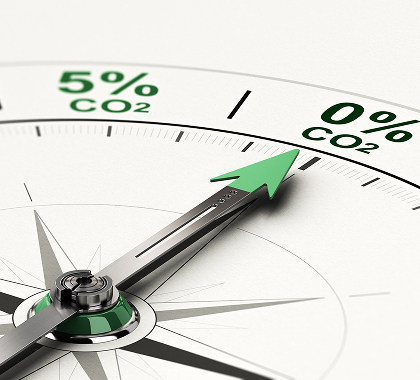
We established a greenhouse gas inventory covering domestic business sites (Headquarters and Cheonan Plant) in 2025.
- Scope 1: Use of city gas (LNG) and fuel consumption by corporate vehicles
- Scope 2: Indirect emissions from electricity and steam consumption
We plan to gradually expand the scope to include Scope 3 emissions and identify carbon impacts across the entire value chain.

Energy Management
We participate in smart energy platform initiatives and have completed the deployment of a Factory Energy Management System (FEMS).
We have installed photovoltaic (PV) power generation facilities at the Headquarters and Cheonan Plant and continue to expand their utilization.
We have installed photovoltaic (PV) power generation facilities at the Headquarters and Cheonan Plant and continue to expand their utilization.
We are promoting the transition of corporate vehicles to eco-friendly models.
We are implementing energy efficiency improvement initiatives, including the adoption of high-efficiency equipment and replacement of boilers with high-efficiency systems.

Water Resource Management
We monitor monthly water consumption to track usage trends and maintain a continuous verification system to detect abnormal usage.
No wastewater is generated due to the inherent characteristics of the manufacturing
We operate a gray water recycling system in our headquarters building
Collected handwashing water → treated through screening, sedimentation, and sand filtration → converted into graywater → chemical treatment → reused as toilet flushing water
We also operate a rain water utilization system in the headquarters building.
Rainwater collected from the building is processed through a graywater treatment system and reused for landscape irrigation.

Air Pollution & Noise Management
We operate a management process for air emission facilities.
Headquarters: Classified as a Class 4 Emission Facility under the Clean Air Conservation Act Cheonan Plant: Not applicable.
Low-emission burners are applied to absorption chillers to minimize pollutant emissions.
We conduct semi-annual self-monitoring of air pollutant emissions and undergo biannual inspections by the Climate and Energy Division of Seongnam City, maintaining emissions below regulatory limits.
We operate commuter shuttle buses to minimize traffic congestion.
We implement workplace noise management procedures and conduct regular noise level monitoring.

Raw Material Management
We manage key raw materials based on the Bill of Materials (BOM).
We reduce raw material usage through design optimization.
In the 2025 ccNC Phase 3 project, fan components were eliminated, resulting in the removal of related parts.
We expand the use of returnable transport containers across logistics operations.
Chemical Substance Management
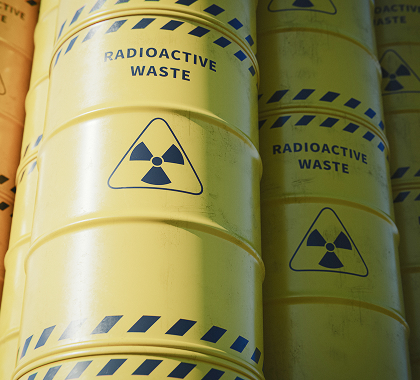
We operate a chemical substance management process.
We comply with REACH Regulations.
All product BOM component data is registered in IMDS, and we issue REACH self-declarations, hazardous substance non-use certificates, and SVHC declarations.
We conduct regular risk assessments in accordance with ISO 14001-based environmental aspect identification and impact assessment procedures (no hazardous substance nonconformities were identified in 2025).
We maintain a management framework for the safe segregation, storage, handling, and disposal of hazardous chemicals.
Waste Management
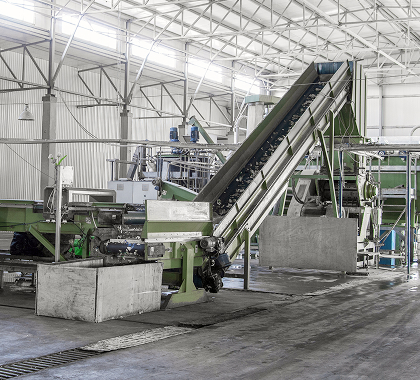
We segregate waste generated at our business sites by type and ensure safe storage and treatment in compliance with applicable legal requirements.
We operate a company-wide inventory and obsolete materials management process.
We conduct impact assessments prior to scrapping obsolete materials and review disposition options in the following order: Reuse → Recycle → Repurpose → Disposal → Liquidation sale.
We improve packaging and loading methods to reduce packaging waste generated during product shipment and export.
We operate a repair-oriented maintenance system.
We provide hardware repair guides to overseas subsidiaries and service agencies.

Environmental Awareness & Training
We promote environmental awareness activities based on everyday practices.
We conduct eco-friendly campaigns, organize employee-led environmental cleanup activities, and provide café discounts for employees using reusable tumblers.
We operate environmental training programs tailored to job functions and target groups.

By integrating advanced IT technologies into automobiles,
we provide drivers with safety and enjoyment.
ADDRESS : 56, Geumto-ro 80beon-gil, Sujeong-gu, Seongnam-si, Gyeonggi-do (Geumto-dong, Withen Tower, Building A)
CEO : Lee Hyung-HwanBusiness Registration No : 108-81-50292
TEL : +82-70-4892-6000FAX : +82-2-6280-1170Customer Service Hotline : +82-2-6959-1122
 MOTREX Linkedin
Designed by Website.co.krCOPYRIGHT @ 2026 MOTREX. ALL RIGHTS RESERVED.